
File drop zone
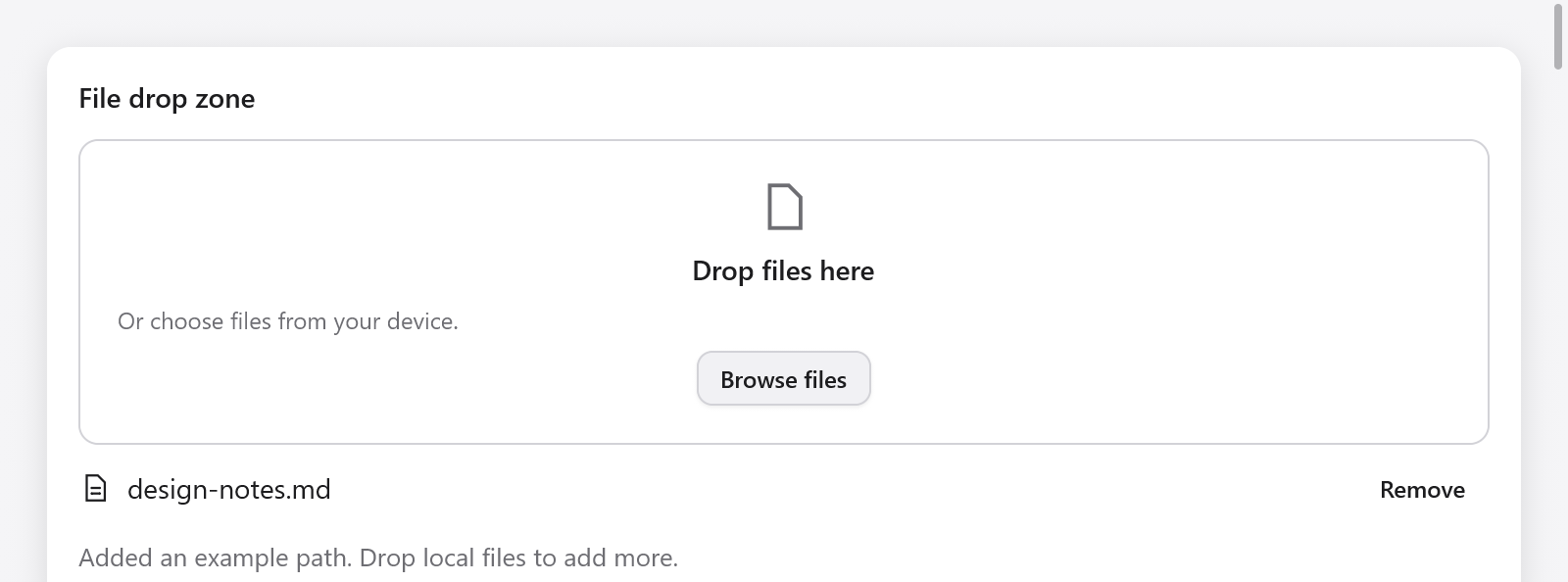
fileDropZone uses the existing DragDrop target mechanism for local file lists and URI lists. FileList owns copies of paths, so they survive after the drop data expires. Neither type reads file contents or uploads files.
// Initialize app state once:
files: ui.FileList, // initialize with .init(gpa)
drag: ui.DragDrop = .{},

// View:
const result = ui.fileDropZone(c, &s.drag, &s.files, .{ .max_files = 8 });
if (result.browse) requestFileDialog();
if (result.err) |err| reportError(err);
// Last in the view, if this controller also has drag sources:
s.drag.preview(c);
On teardown call files.deinit() and drag.deinit(). Add paths returned by your app's file dialog with try files.add(path); request a redraw after the asynchronous result arrives. add copies the string and returns false for empty paths or duplicates. Programmatic additions are not limited by the drop zone's max_files.
The widget returns changed, browse, over, the number of paths rejected by max_files, and an optional allocation/decoding err. Earlier accepted paths remain if a later one fails. Duplicate paths do not consume capacity. The list has a Remove action per path; disabled blocks browsing, removal and drops. Customize title, description, browse_label and width.
The Gallery's Browse action adds a sample path to keep its example deterministic. Production apps handle the browse event themselves. External drag capabilities remain those of the existing backend; see drag and drop.